Event planners should choose made to order table linens when specific dimensions, unique fabrics, or safety certifications like flame resistance are required for high end events. While stock linens offer cost savings for bulk needs, custom options provide a tailored fit and superior aesthetic that enhances venue transformations for weddings and galas. This professional choice balances the need for immediate availability against the value of a perfectly fitted and luxury presentation.
Few things compromise the visual integrity of a high end event more quickly than a tablecloth that misses the mark. Whether it is a hem that hovers an inch too high or a synthetic sheen that clashes with a curated floral design, stock linens often force planners into a compromise between cost and quality. Choosing between off the shelf options and bespoke, made to order pieces is a strategic decision that affects both your bottom line and your brand reputation. In this guide, we explore the technical nuances of professional linen selection. You will learn the true cost per table of custom work, the critical fire safety standards required for luxury venues, and the precise sizing techniques that ensure a flawless silhouette. From fabric selection to the logistics of long term care, we provide the expert framework necessary to select the perfect foundation for your tablescape.
Understanding the Foundation: Stock vs. Made-to-Order Table Linens
In the hospitality industry, the distinction between stock and made-to-order table linens dictates the final aesthetic of a room. Stock linens are pre-manufactured in high volumes and kept in warehouses for immediate dispatch. These are typically available in standard sizes like 90x90 square or 120 inch rounds. While they offer speed, they often feature basic surged edges, which can fray over time and lack the weight necessary for a professional drape.
Conversely, investing in custom made-to-order linens allows for precise dimensions, specialty fabric blends, and superior construction details like professional rolled hems. This process involves cutting and sewing fabric specifically for a client's requirements, ensuring a tailored fit for any venue. For larger tables, made-to-order options provide a seamless finish that stock items cannot match, as they are constructed to avoid the awkward seams common in mass-produced goods. This level of customization ensures that every piece, from tablecloths to professional table skirts, fits the furniture perfectly without leaving unsightly gaps or bunching. Choosing between these foundations involves balancing the need for immediate inventory against the desire for a refined, high-end presentation that withstands the rigors of commercial use.
The Real Cost of Custom Tablecloths per Table
The question of price is often the first hurdle in procurement. For a standard 132 inch round tablecloth, high quality stock options typically range between $20 and $40 per unit. In contrast, custom made to order table linens usually start at $60 and can exceed $120 depending on the fabric weight and specialized finishes. At first glance, the stock option appears to be the fiscal winner; however, the true cost of a linen is measured by its lifespan rather than its invoice price.
Feature | High-Quality Stock | Made-to-Order Custom |
|---|---|---|
Initial Cost | $20 – $40 | $60 – $120+ |
Expected Wash Life | 5 – 10 cycles | 50 – 75+ cycles |
Cost per Use (Avg) | $4.00 – $6.00 | $1.20 – $2.00 |
Edge Construction | Basic surged | Professional rolled or mitered |
Fabric Weight | Standard (Light) | Heavy-duty (High GSM) |
In my twenty years managing Florida venues, I have seen cheap bulk stock succumb to the Florida factor within a single season. The combination of high humidity and the aggressive industrial laundry cycles required for high turnover hospitality environments is brutal on thin fabrics. Low grade stock linens often begin to pill, fray at the surged edges, or lose their structural integrity after just five washes. A professional grade, made-to-order linens selection is constructed from heavier weight fabrics, often exceeding 220 GSM, which are engineered to survive dozens of industrial washes without losing their shape or color vibrancy.
When you calculate the cost per use, the financial advantage shifts dramatically. A $30 stock cloth that fails after five uses costs $6.00 per event. A $90 custom cloth that lasts for 60 uses costs only $1.50 per event. This longevity is achieved through better raw materials and superior construction methods that do not unravel in the heat of a commercial dryer. For venues that prioritize long term ROI over immediate savings, investing in custom pieces is the practical choice. Whether you source stock or invest in a custom run, choosing a reputable supplier is the first step to consistent quality.
When Stock Linens Are the Right Choice for Your Venue
While custom made-to-order linens provide the best long term value, stock inventory remains a staple for specific logistical realities. In the event world, lead times are often non negotiable. If a booking comes in with a 48 hour turnaround, stock linens are the only viable solution because they are boxed and ready for immediate shipping from large warehouses. This speed is essential for emergency replacements or last minute additions to a room count that a custom shop simply cannot accommodate on short notice.
For high volume, basic events like large scale corporate breakout sessions or government seminars, the priority is often utility over high design. When a client is working with a strict per head budget that leaves little room for decor, bulk stock fulfills the basic requirement of covering a table at the lowest possible entry price. Standard 6 foot and 8 foot banquet tables are where stock linens perform best. Because these table dimensions are universal across Florida hotels and convention centers, stock manufacturers produce thousands of units designed to fit them adequately without the need for specialized tailoring.
Planners also frequently choose bulk tablecloths for 'one and done' events. This is common in wedding scenarios where a couple on a shoestring budget manages their own setup and plans to resell the linens afterward rather than paying for professional laundering. In these instances, the durability and 50 plus wash cycle lifespan of made to order table linens is less important than the immediate cash flow savings. When buying outright does not make sense, a linen rental collection offers event-ready pieces without the long term storage commitment. If the venue already uses professional table skirts for their buffets, stock linens can serve as a functional, color matched topper for the utilitarian tables that don't require a floor length, custom drape.
The Made to Measure Advantage: Sizing for a Custom Look
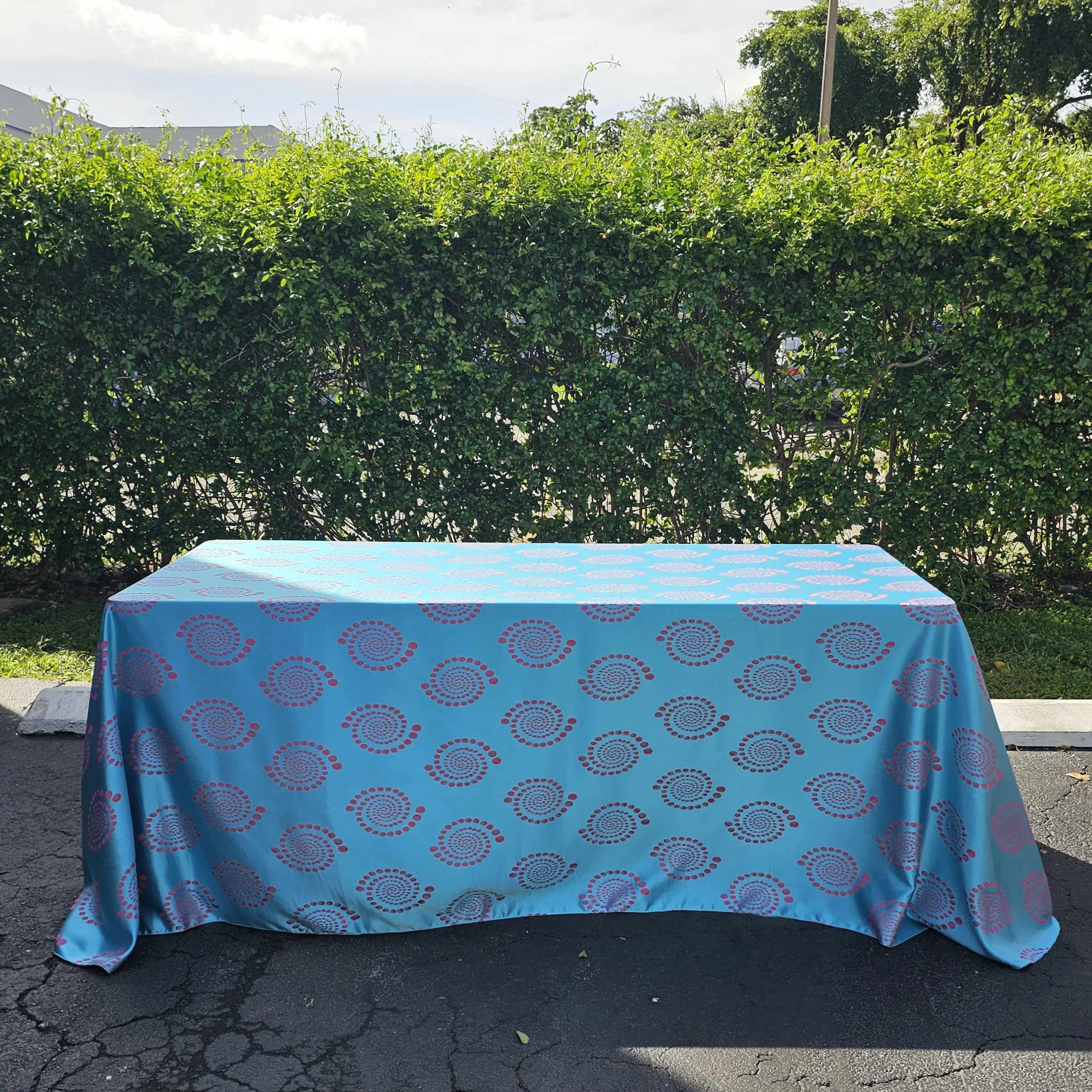
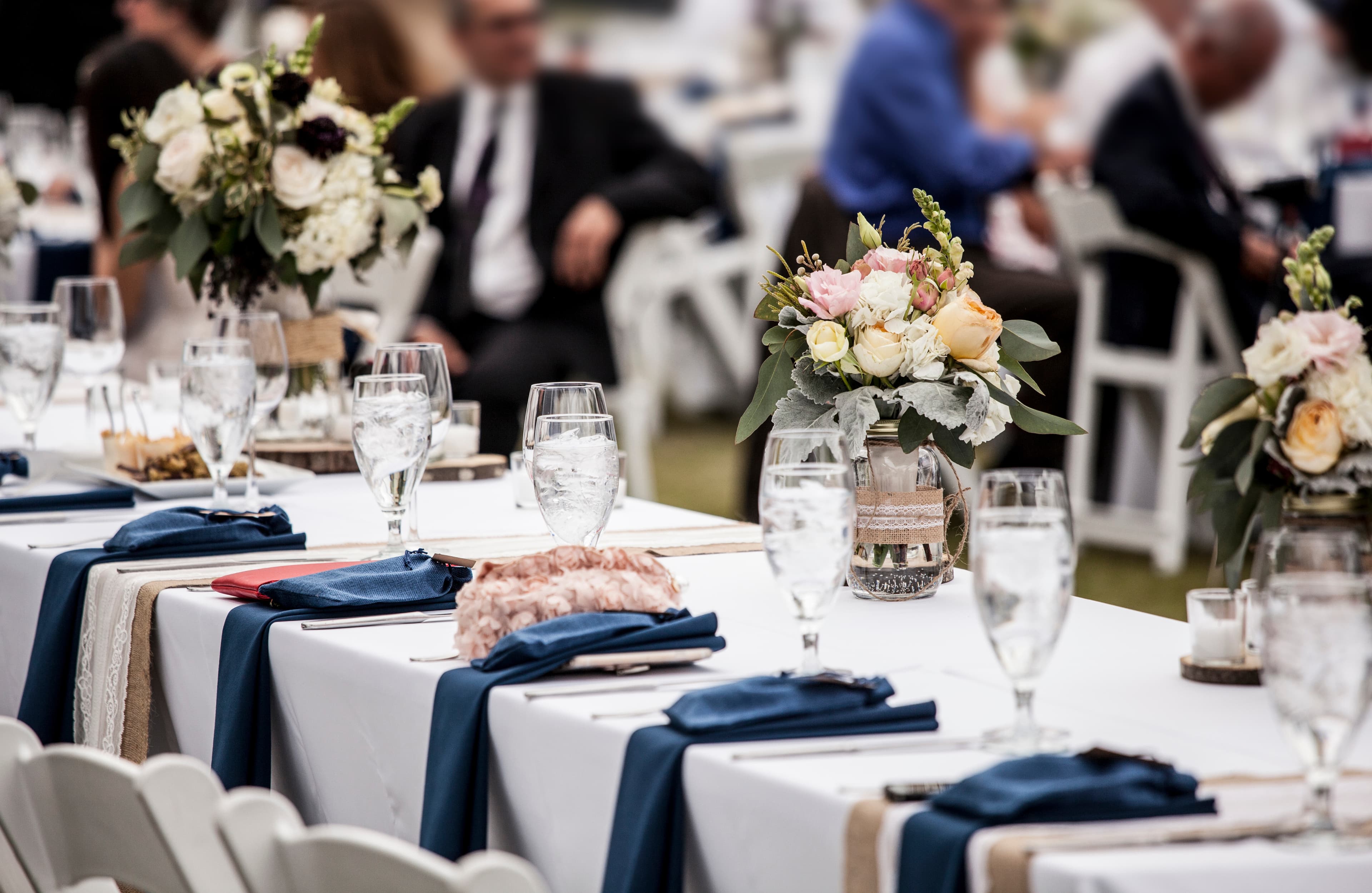
While stock linens serve a logistical purpose, they often struggle with the last inch of presentation. A standard 132 inch round cloth is designed for a 72 inch round table at a 30 inch height, yet tables in the field rarely adhere to these exact geometries once table pads or slightly taller adjustable legs are factored in. When a cloth is just two inches too short, you get the ankle effect, where the table legs are visible. This immediately signals a lower tier production to your guests.
Custom made-to-order linens solve this by accounting for the specific height of your inventory. For instance, cocktail hour high-tops at Florida galas often stand at 42 inches. Using a standard stock cloth on these taller tables usually results in a messy, uneven hem that fails to reach the floor. A tailored cloth is cut to the precise diameter and drop required to hit the floor perfectly, or even slightly puddle if a high luxury aesthetic is desired. Puddling must be handled with care, however, as too much excess fabric creates a genuine tripping hazard in high traffic areas like ballroom entrances or busy buffet lines.
The rental look is often characterized by awkward corner bunching on rectangular tables. Because stock linens are mass produced for broad compatibility, they frequently have excess fabric at the corners that folds clumsily. Made to measure options can be manufactured with inverted pleats or precise corner cuts that allow the fabric to fall straight. This clean vertical line is what separates a professional venue from one that simply throws a cloth over a table. If your layout includes non-standard shapes like serpentine tables or extra wide estate tables, combining custom cloths with professional table skirts is the only way to avoid a patchwork appearance that detracts from the event design. Achieving a seamless drape requires looking past the standard catalog and measuring for the specific furniture in your room.
Fabric Selection and Fire Safety Requirements
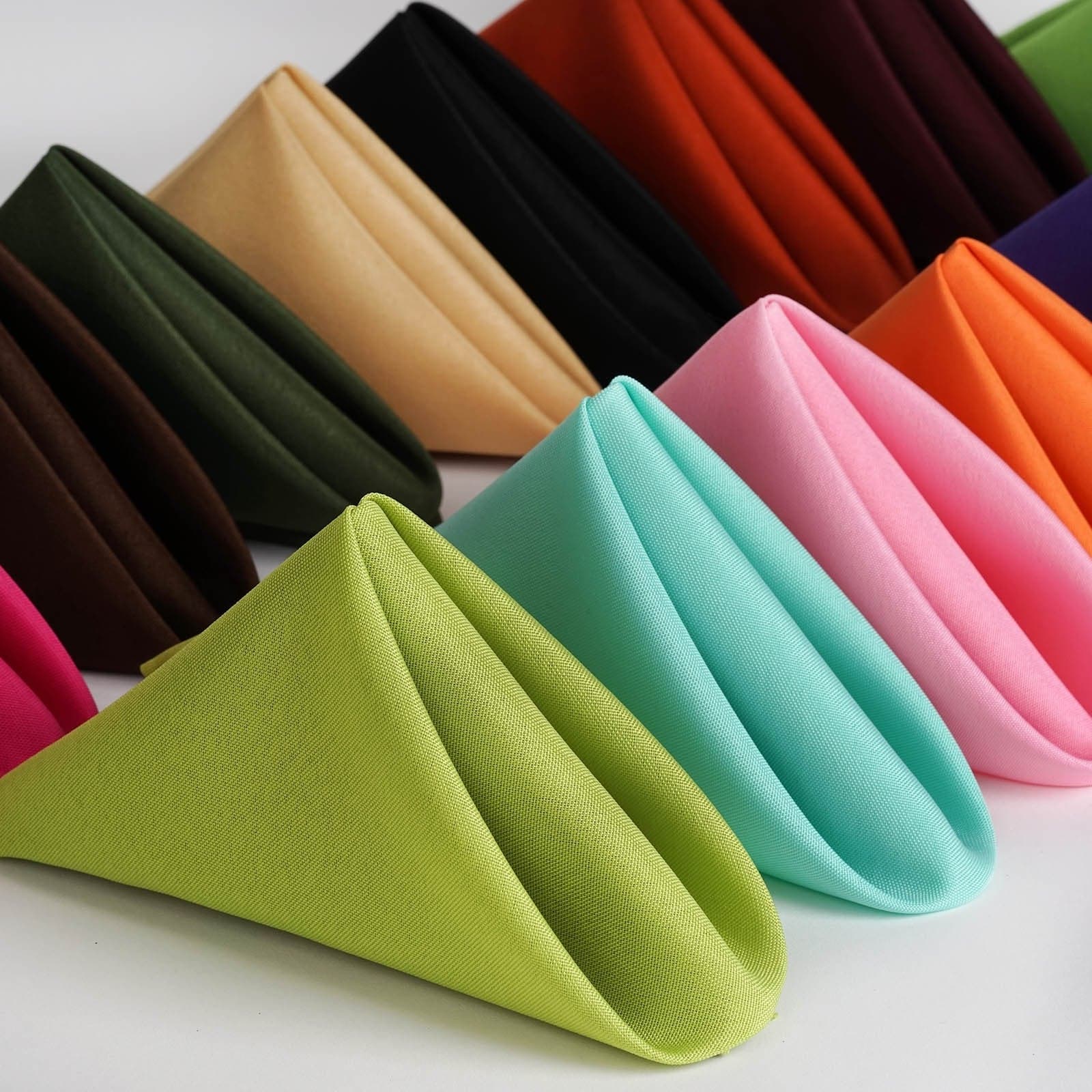
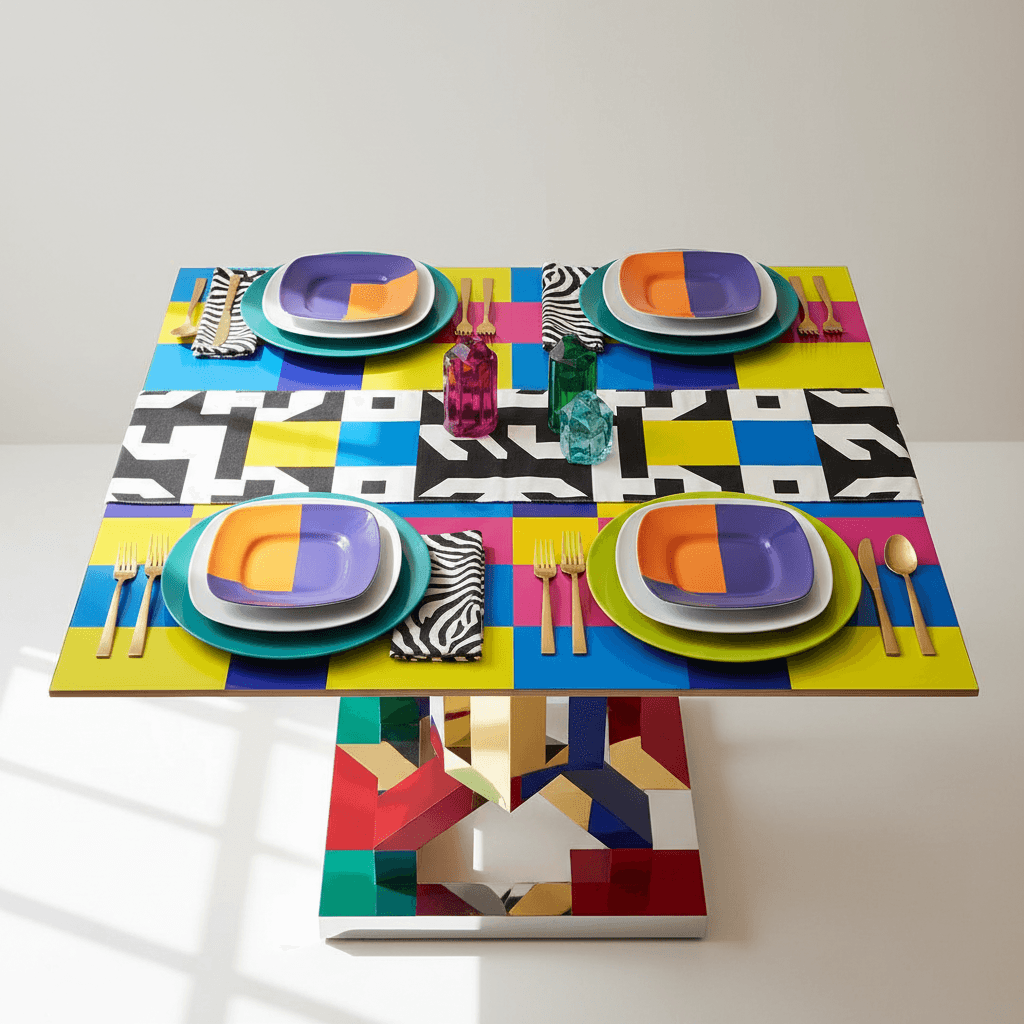
Choosing the right material involves balancing aesthetic goals with the rigorous demands of public safety codes. Standard stock linens are almost exclusively lightweight filament polyester, which has a shiny, synthetic finish and tends to slip on the table. In contrast, custom made-to-order linens open the door to high-performance fabrics like spun poly, which mimics the hand-feel of cotton while maintaining industrial durability, or heavy-weight velvets that provide superior sound absorption in large ballrooms. For venues that want branded or patterned pieces, custom printed linens and tablecloths let you carry logos, themes, or event graphics directly onto the fabric.
Fabric Type | Performance Profile | Ideal Application |
|---|---|---|
Spun Polyester | Cotton-like feel, high pill resistance, excellent color retention | High-end dining, corporate galas |
Crushed Velvet | Heavy GSM, luxurious sheen, masks table imperfections | VIP lounges, winter holiday events |
Stock Filament Poly | Lightweight, prone to snagging, thin texture | Basic meetings, high-volume casual events |
Safety compliance is where the gap between retail stock and professional-grade custom linens becomes a liability issue. Most Florida convention centers and large-scale hotel ballrooms strictly enforce NFPA 701 fire safety standards. While many bulk stock sellers claim their products are safe, they rarely provide the documented, lot-specific flame certificates required by a fire marshal. Made-to-order suppliers typically work with inherently flame-retardant (IFR) yarns or provide treated fabrics accompanied by verifiable certification for that specific production run. This documentation is essential for passing site inspections at major Florida venues, ensuring your event is not delayed or cited for non-compliance.
Logistics and Care: How to Store and Transport Event Linens
Proper logistics determine if your high-end fabric actually looks high-end once it hits the table. To transport table linens for a wedding or large-scale gala, the industry standard is to move them on rolling garment racks rather than folding them into hampers. While hampers are easier for logistics teams, they create deep, cross-hatched creases that are nearly impossible to remove without a commercial iron. Hanging linens on heavy-duty hangers with cardboard struts prevents these sharp folds and maintains the vertical integrity of the fabric.
Quality plays a significant role in how well a linen survives transit. Because custom made-to-order linens typically feature a higher GSM, the fabric has enough weight to pull itself smooth under its own gravity. Thin, low-GSM stock linens lack this tension; they tend to hold every micro-wrinkle and often arrive looking like they were pulled from a dryer ball. If you are using professional table skirts, always transport them on specialized hangers to ensure the pleats remain crisp and the header stays straight.
In Florida's high humidity, linens can become limp quickly if left in a non-climate-controlled van. A final inspection and touch-up once the linens are on the tables is non-negotiable for a professional finish.
On-Site Preparation Checklist: - Perform a light-pass inspection: Check for pinholes or faint grease stains that only appear under bright ballroom lighting. - Use a commercial-grade upright steamer: Focus on the hemline and corner folds where transit pressure is highest. - Monitor humidity levels: In outdoor Florida settings, steam linens thirty minutes before guest arrival so the ambient moisture does not cause the fabric to sag prematurely. - Verify hem alignment: Ensure the drop is uniform around the entire perimeter before placing centerpieces.
Choosing between stock and custom table linens ultimately depends on your project timeline, budget, and specific design goals. While ready-to-ship options provide convenience, made-to-order pieces offer a signature touch that truly defines an event. We can help you identify the ideal Linens to bring your unique vision to life. Finding this balance ensures your next tablescape is both beautiful and professional.